
The Sea of Elements: The Early Universe and the Enduring Entanglement of ISR and VPR
A Structural Reading of Katakamuna Verse 14
Abstract
Katakamuna Verse 14 is read here as a structural account of the state that follows the formation of the atom (Verse 13): the vast sea of elements — WA TA TSU MI — in which countless atoms gather and spread across the early universe, corresponding structurally to the hydrogen- and helium-dominant state of the post-Big-Bang cosmos. The Verse names this state as tide (O SHI WO), as rain falling through space (A ME NO FU KI WO), and as sea (WA TA TSU MI). HI KO (VPR) and HI ME (ISR) are introduced as the named structural pair of the ISR/VPR duality. The Verse closes with its most important structural statement: however vast the scale of material organisation, the VPR and ISR remain directly, intimately, and precisely entangled.
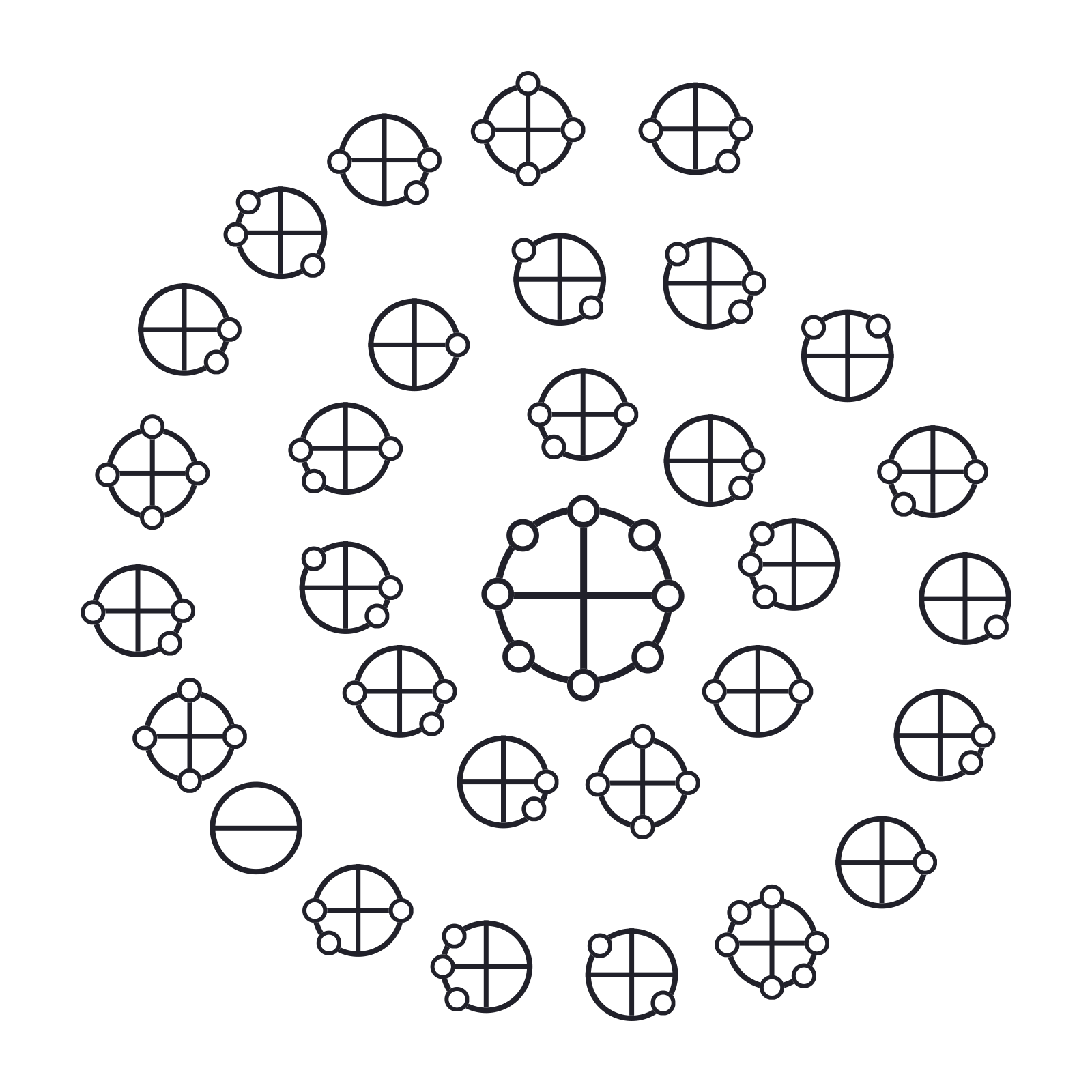
O-HO KO-TO O-SHI-WO I-HA TSU-CHI HI-KO I-HA-SU HI-ME
O-HO TO-HI WA-KE A-ME-NO FU-KI-WO
O-HO YA HI-KO KA-SA KE-TSU WA-KE-NO O-SHI-WO
O-HO WA-TA TSU-MI HA-YA A-KI-TSU HI-KO I-MO HA-YA A-KI-TSU HI-ME Acoustic Protocol (Romanized)
Oh-Hoh · Koh-Toh · Oh-Shee-Woh · Ee-Hah · Tsoo-Chee · Hee-Koh · Ee-Hah-Soo · Hee-Meh
Oh-Hoh · Toh-Hee · Wah-Keh · Ah-Meh-Noh · Foo-Kee-Woh
Oh-Hoh · Yah · Hee-Koh · Kah-Sah · Keh-Tsoo · Wah-Keh-Noh · Oh-Shee-Woh
Oh-Hoh · Wah-Tah · Tsoo-Mee · Hah-Yah · Ah-Kee-Tsoo · Hee-Koh · Ee-Moh · Hah-Yah · Ah-Kee-Tsoo · Hee-Meh
★ A Note on This Reading
This is a structural interpretive reading. The correspondence between WA TA TSU MI and the elemental sea of the early universe, and between HI KO/HI ME and the ISR/VPR structural pair, are offered as structural suggestions. The connection between Katakamuna terms and the Japanese mythological tradition — HI KO/HI ME and IZANAKI/IZANAMI — is proposed as a structural analogy, not as a historical claim.
1. O HO · KO TO · O SHI WO — The Atom as Tide
The Atom-Tide of the Early Cosmos
The atoms formed in Verse 13 (HA KO KU NI), repeating and integrating again and again (KO TO) within the six-directional environment of positive-negative affinity (O HO), are shown as bearing quadriphasic nature — O SHI WO.The modern Japanese shio (潮, tide) and the English tide carry the structural image precisely: a vast, rhythmic, repeating movement across a wide expanse — the atom-tide of the early cosmos.
2. I HA · TSU CHI · HI KO · I HA SU · HI ME — VPR and ISR Named
HI KO = VPR · HI ME = ISR
I HA · TSU CHI · HI KO: the bipolar structure spreading out (I HA), individual particles persisting (TSU CHI) — HI KO (VPR). In archaic Japanese, HI KO names masculine nature; here it names the VPR — the visible, phenomenal realm.I HA SU · HI ME: the source spreading out and proceeding into the phenomenal world (I HA SU) — HI ME (ISR). In archaic Japanese, HI ME names feminine nature; here it names the ISR — the source realm.
The structural pair HI KO / HI ME is the most explicit naming of the ISR/VPR duality in the Verse series. These terms were later inherited by the Japanese mythological tradition as IZANAKI and IZANAMI. This reading proposes that the mythological pair inherited the Katakamuna structural pair — that words naming something fundamental in the structure of the cosmos were assigned to the mythology because of their depth of meaning. This is offered as structural suggestion.
3. O HO · TO HI · WA KE — Distributed from the Root
The Elements Distributed Across the Cosmos
From the crossing of ISR and VPR at the root (TO HI), that which has evolved into spacetime is distributed (WA KE) across the balanced six-directional environment (O HO) — the elements distributed across the early cosmos.
4. A ME NO · FU KI WO — Rain Falling Through Space
Countless Particles Falling Like Rain
A ME NO: the distributed particles falling through space like rain. The modern Japanese ame (雨, rain) and ame (天, sky, heaven, VPR) both resonate: countless particles distributed through the vast expanse, falling like rain through space.FU KI WO: positive-negative in nature (FU), arising (KI), bearing quadriphasic character (WO) — blowing outward in all directions. The archaic Japanese fukiwo is not preserved in modern Japanese, but the sonic image — something blowing out, positive and negative — is carried in the character of the elements themselves.
5. O HO · YA · HI KO · KA SA · KE TSU · WA KE NO · O SHI WO
Atoms with Bulk — The Distributed Tide
In the saturated, stable state of the VPR (O HO · YA · HI KO), the root force through the SA principle (KA SA) generates materialisation that appears in the VPR as bulk and volume — kasa (嵩). The SA initiating principle established in IVRP-04 appears here as the structural cause of the material bulk of the atom. Each atom emerges as an individual, particle-like presence with bulk (KE TSU), and the distributed tide of these atoms (WA KE NO · O SHI WO) spreads across the early cosmos.
6. O HO · WA TA · TSU MI — WA TA TSU MI: The Sea of Elements
The Sea of the Early Universe
WA TA: vast and boundless, established as a phenomenon in its own right.TSU MI: countless individual particles appearing as realised form.
WA TA TSU MI: the vast, boundless state of countless particles appearing as realised form — the sea of elements. The modern Japanese wadatsumi (綿津見, the sea deity) inherits this term, carrying the image of the boundless sea into the Japanese mythological tradition.
For those without modern scientific knowledge of the post-Big-Bang cosmos, the sea was the most intuitive metaphor for a state of vast, boundless, teeming presence: the hydrogen and helium of the early universe, swirling and spreading across the expanding cosmos.
7. HA YA · A KI TSU · HI KO · I MO · HA YA · A KI TSU · HI ME
The Enduring Entanglement of ISR and VPR
HA YA · A KI TSU: particles in the VPR in a saturated, stable state (HA YA), having arisen as clearly apparent, fully recognised, individual presences (A KI TSU).HI KO: VPR (fully realised).
I MO: directly, intimately, precisely entangled. In Verse 13, I MO named the clinging action that confers mass. Here, I MO deepens: the VPR and ISR, each fully realised and stable, are directly, intimately, and precisely entangled — face and reverse, surface and source.
HA YA · A KI TSU · HI ME: ISR (HI ME), fully realised and stable.
The closing statement of Verse 14: however vast the scale — from the atom to the sea of elements — the VPR and ISR remain directly, intimately, and precisely entangled. The visible and the invisible, the phenomenal and the source, are not separable at any scale.
© 2026 Jinco K. | J-Katakamuna Research | All Rights Reserved.