
The Declaration of Forty-Eight — The Opening of the Song Sequence
A Structural Reading of Katakamuna Verse 04
Abstract
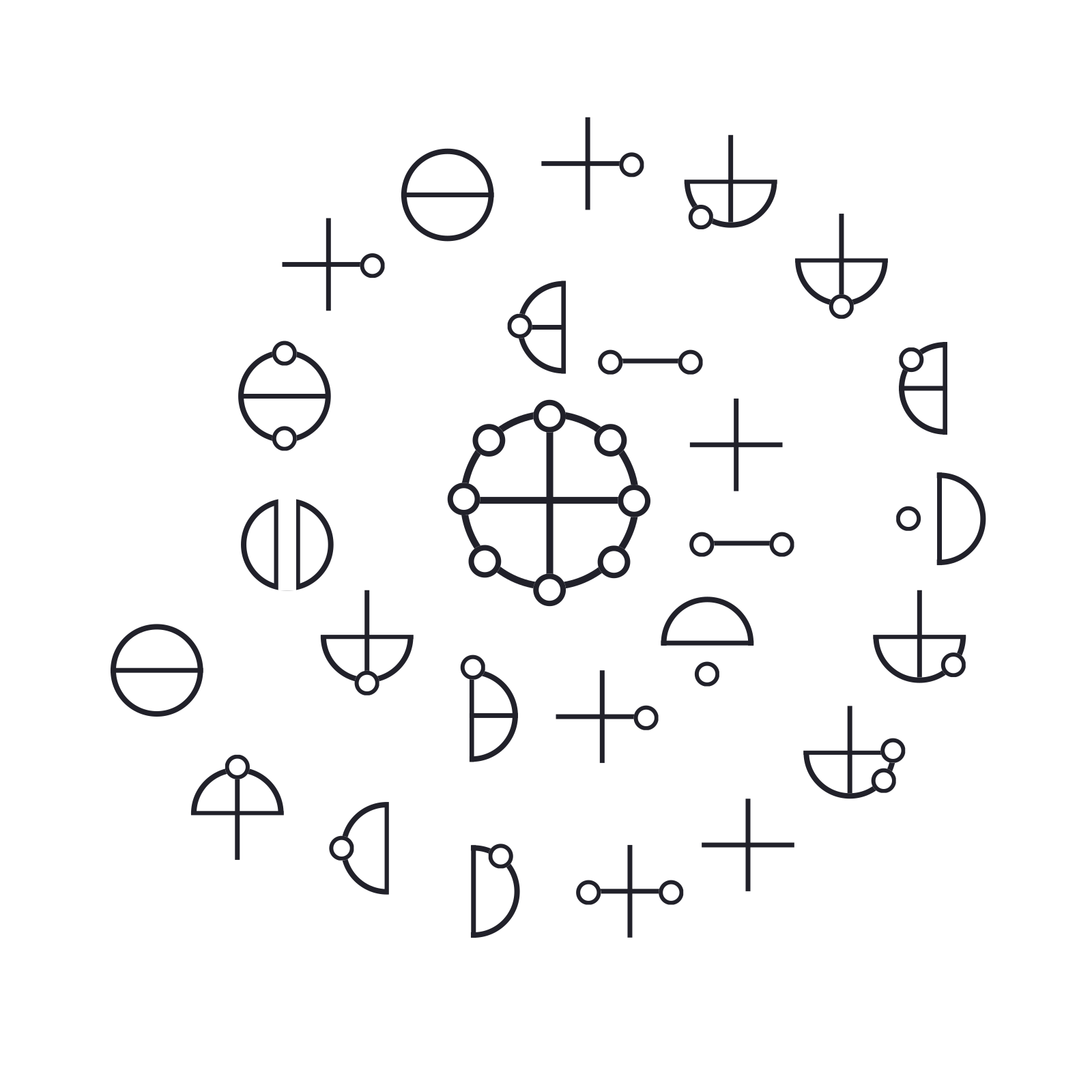
YO-SO-YA KO-TO HO-KU-SI U-TA Acoustic Protocol (Romanized)
Ee-Hah-Toh-Hah-Nee · Kah-Mee-Nah-Ree-Teh · Kah-Tah-Kah-Moo-Nah
Yoh-Soh-Yah · Koh-Toh · Hoh-Koo-Shee · Oo-Tah
The use of SO (archaic ten) rather than TO (Numeral 10) is structurally significant: TO carries the specific thought-image of ISR/VPR crossing and integration, incompatible with a simple numeral function. The sonic element system and its thought-images were prior; the numerical expression had to work within their constraints.
Introduction: The Fourth Song
Verse 01 established the primordial resonance and the permanent ISR/VPR connection. Verse 02 named KAMI as the root of all individual existence. Verse 03 described the condition of life (MIKOTO) and the universal principle of existence (FU TO MA NI). These three Verses form a structural preface.
Verse 04 is the fourth song and the last of the preface. Seventy-five Verses remain. Standing at the threshold between the foundational framework and the main body of the eighty songs, Verse 04 declares what is about to begin: the forty-eight Sonic Elements, systematically given as song.
Phase 1 — I HA TO HA NI : The Structural Preconditions
HA: the bipolar field spreading across both the ISR-side and VPR-side simultaneously.
TO: the crossing and integration of ISR and VPR.
HA: the bipolar field spreading again — confirming the bilateral extension.
NI: settling with certainty into the phenomenal world.
I HA TO HA NI: from the state in which positive and negative have arisen, the bipolar field spreads, ISR and VPR cross and integrate, the bipolar field spreads again, and the result settles with certainty. The structural preconditions for all phenomenal generation — confirmed and in place.
Phase 2 — KA MI NA RI TE : The Root Force Released
NA RI: through repeated separation and differentiation.
TE: into bipolar phenomenal form.
KA MI NA RI TE: the root force passes through the preconditions of I HA TO HA NI and arrives in the phenomenal world as differentiated, bipolar phenomena.
The modern Japanese kaminari (雷, thunder and lightning) preserves this sonic sequence directly: the electrical discharge between sky and earth — the root force released as a bipolar phenomenon between two realms. The Katakamuna concept came first; the Japanese word inherited it.
KA TA KA MU NA : The Mediating Mechanism
Phase 3 — YO SO YA · KO TO : The Forty-Eight Sonic Elements
SO: Numeral 10 in archaic Japanese (so). TO was not used here because TO carries the specific thought-image of ISR/VPR crossing — incompatible with a simple numeral. SO preserves the count without importing an unintended thought-image.
YA: Numeral 8.
YO (4) · SO (10) · YA (8) = 48.
KO TO: the forty-eight words — the forty-eight Sonic Elements of Katakamuna. Preserved in the modern Japanese koto (言, word, language).
YO SO YA KO TO: the forty-eight Sonic Elements — the complete structural units from which all eighty Verses are built, declared here at the opening of the main body.
Phase 4 — HO KU SI · U TA : Laid Out Systematically as Song
U TA: established in Verse 01 — from the ISR/VPR interface (U), an independent presence arises (TA): the song, the utahi.
HO KU SI U TA: the forty-eight Sonic Elements of Katakamuna, systematically laid out and presented as song. The seventy-five Verses that follow are this song. They begin here.
© 2026 Jinco K. | J-Katakamuna Research | All Rights Reserved.