
Geometric Elrements

Geometric Element

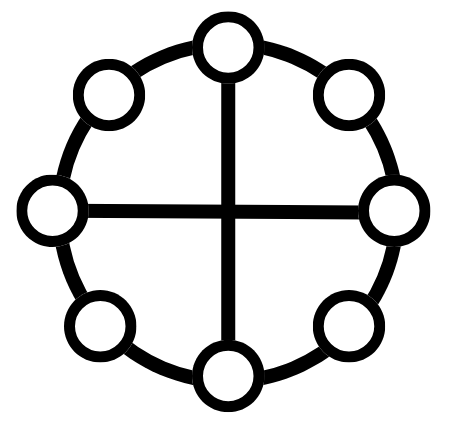
Katakamuna characters are composed of precisely 21 fundamental geometric elements: vertical lines, horizontal lines, a central large circle, and eight peripheral small circles. Each of these elements serves as a topological symbol, imbuing a profound conceptual meaning that dictates its form.

To decode Katakamuna, we utilize a dual-track methodology:
1. Mind-based Analysis: Logical deconstruction of shapes and conceptual meanings.
2. Intuitive Perception: Direct, non-verbal cognition of universal truths.

This section functions as a foundational resource to deepen your analytical understanding. By accumulating logical knowledge of these 21 elements, you will eventually reach a state of cognitive synthesis where the meaning of each glyph is perceived intuitively at a glance.

The Concepts of Ama and Kam

These 21 elements symbolically encapsulate the binary nature of existence: Kam (the latent source) and Ama (the phenomenal manifestation).

Ama

The Phenomenal World perceptible through our five senses. It encompasses the 5% of observable matter known to modern physics, as well as the yet-to-be-explained dark energy and dark matter that constitute the fabric of our universe.

Kam

The Latent World; the fundamental dimension existing prior to form. It serves as the primordial source of matter and energy, governing all cosmic activities that remain beyond the current reach of material science.

Katakamuna elucidates the truth that these two dimensions of Ama and Kam exist in constant interaction to sustain the cosmos. Understanding these elements is the prerequisite for decyphering the 48 “Sonic Elements” that follow.

This is the systematic transition from geometric logic to sonic resonance.
1

1. Vertical Line

Shape: Vertical line
Symbol: KAMU
2

2. Horizontal Line

Shape: Horizontal line
Symbol: AMA
3

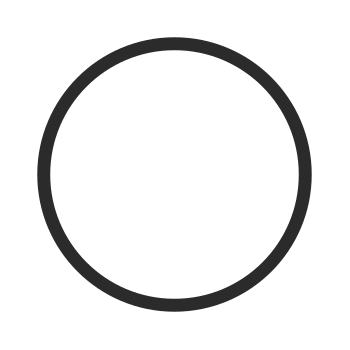
3. Circle

Shape: Complete circle
Symbol: Unified whole
4

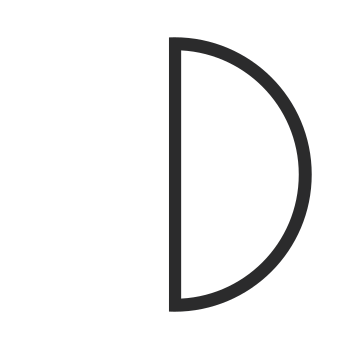
4. Right Semicircle

Shape: Opening to the right
Symbol: KAMU
5

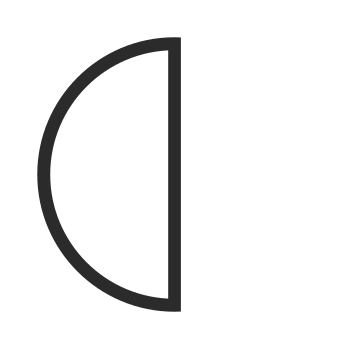
5. Left Semicircle

Shape: Opening to the left
Symbol: AMA
6

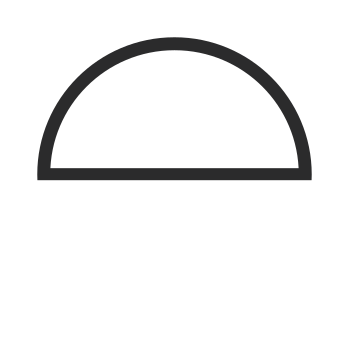
6. Upper Semicircle

Shape: Upward-opening
Symbol: KAMU
7

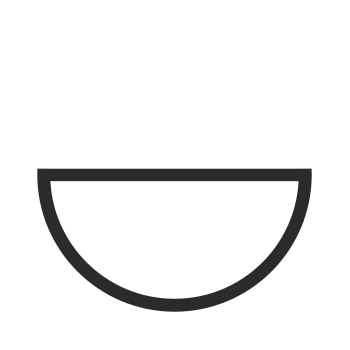
7. Lower Semicircle

Shape: Downward-opening
Symbol: AMA
8

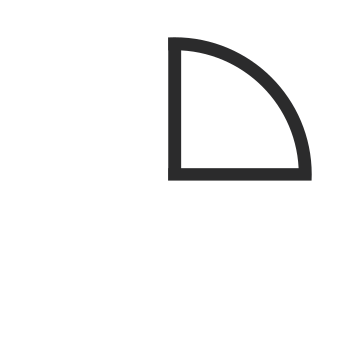
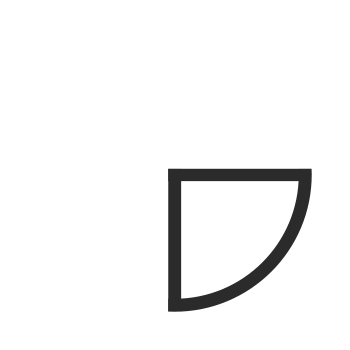
8. Upper Right Quarter

Shape: Upper right position
Symbol: KAMU-KAMU
9

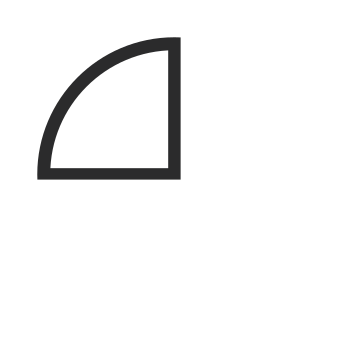
9. Upper Left Quarter

Shape: Upper left position
Symbol: AMA-KAMU
10

10. Lower Left Quarter

Shape: Lower left position
Symbol: AMA-AMA
11

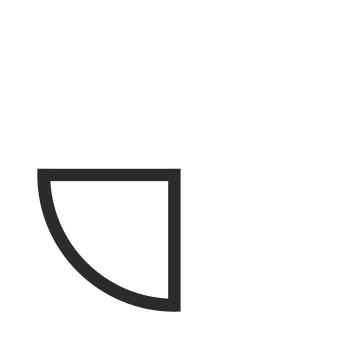
11. Lower Right Quarter

Shape: Lower right position
Symbol: KAMU-AMA
12

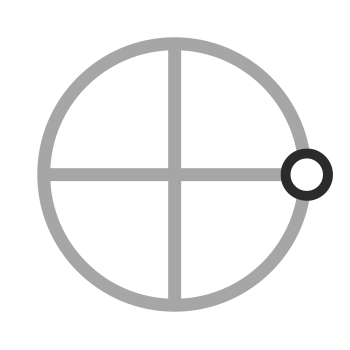
12. Small Circle (Right)

Shape: Right center
Symbol: 1
13

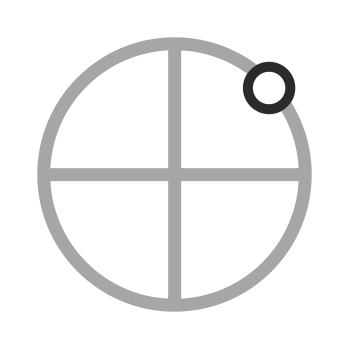
13. Small Circle (U-Right)

Shape: Upper right diagonal
Symbol: 2
14

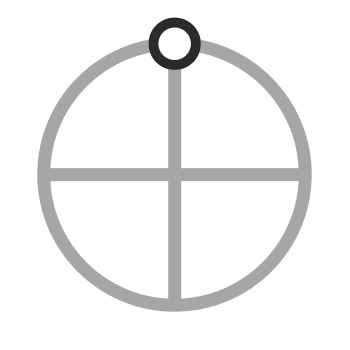
14. Small Circle (Top)

Shape: Top center
Symbol: 3
15

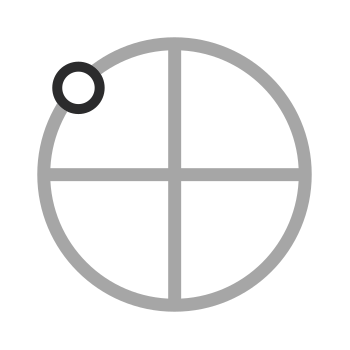
15. Small Circle (U-Left)

Shape: Upper left diagonal
Symbol: 4
16

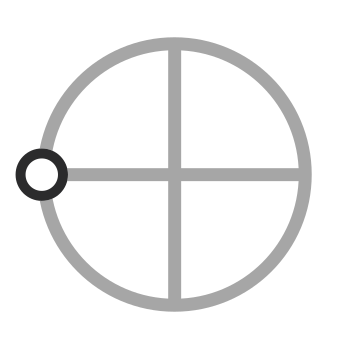
16. Small Circle (Left)

Shape: Left center
Symbol: 5
17

17. Small Circle (L-Left)

Shape: Lower left diagonal
Symbol: 6
18

18. Small Circle (Bottom)

Shape: Bottom center
Symbol: 7
19

19. Small Circle (L-Right)

Shape: Lower right diagonal
Symbol: 8
20

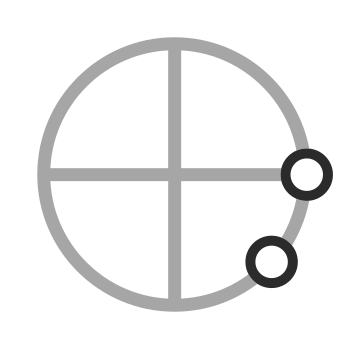
20. Two Small Circles

Shape: Pos. 1 and 8
Symbol: 9
21

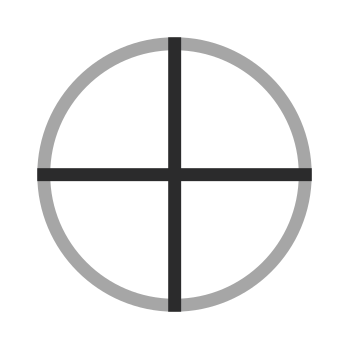
21. Cross / Intersection

Shape: Vertical & horizontal
Symbol: 10
The Futo-mani Chart Title
A symbolic diagram of Katakamuna.
Futomani Symbol Integration

The Futomani Symbol

The Futomani symbol represents the ultimate integration of these 21 fundamental elements. It is not merely a geometric arrangement, but a multidimensional map of the cosmos.

The Futomani is the “Source Code” of the Universe.

By synthesizing vertical and horizontal lines with the circular rotations of latent and phenomenal energies, the Futomani functions as a powerful resonance device. It encapsulates the entirety of the universe—from the primordial source to the manifest reality—within a single, unified geometry.

上部へスクロール